“Trust is important, but trustworthiness is even more so. Trust is only as good as is the trustworthiness of that in which we place our trust.” Thank you, Miroslav Volf, for saying what I said two years ago about why faith is a virtue.
When the apostles returned, they gave an account to Him of all that they had done. Taking them with Him, He withdrew by Himself to a city called Bethsaida. But the crowds were aware of this and followed Him; and welcoming them, He began speaking to them about the kingdom of God and curing those who had need of healing (Luke 9:10-11).
Sometimes—probably often—Jesus gave preference to the needs, desires, and priorities of others over His own.
Today, I I called myself a “whimsical dabbler” as a way of celebrating and embracing my quick decision to stand on our stoop and cheer the Nittany Valley Half-Marathoners on as they passed by about midday today. (We’re at about mile eleven of their route.) It thereby also a way to encourage myself to make more decisions of what to do out of loving whim, and to accept my identity as a dilettante, and not just in the arts. Indecision about hunting this past week had me down this morning after an unsuccessful hunt yesterday.
I did decide I would become a suburban bowhunter after finding out how much red meat meant to Carla.
Follow the impulses of your heart and the desires of your eyes, yet know that God will bring you to judgment for all these things. Let all that you do be done in love, that is, in self-donation for the benefit of others, whom you view as more important than yourself and unsurpassably wonderful.
“If the grass feels greener on the other side, it might be the Holy Spirit reminding you to water the grass you’re standing on.”
Do I need to be thinking less about the Bible and more about the world around me? Solving not the problems presented by the Text but those I find in the world? It’s a false dichotomy, yes, but perhaps not so much considering that I only have so much time.
Smattering of recollections from venison roast dinner this evening with Sauders at their house: I got to share my Alan Jacobs story. They were delighted at God’s activity. They remarked that we’re funny—like, make-you-laugh funny—something they don’t have enough of among their friends at University Mennonite Church. I surmised that social justice warriors have a hard time smiling. Ruth insisted that people ought to grow more idiosyncratic as they age, as long it’s not grumpily idiosyncratic. As such, in reply to Carla’s question about whether the Sauders think I’m weird, her answer was a very positive affirmative. I picked up Ta-Nehisi Coates’ letter to his son as my next book. The kids made Ed the Rabbit some things to chew on. It was a delightful evening.
Here are my notes on Between the World and Me by Ta-Nehisi Coates:
On reading at Whim:
“The pursuit of knowing was freedom to me, the right to declare your own curiosities and follow them through all manner of books. I was made for the library, not the classroom. The classroom was a jail of other people’s interests. The library was open, unending, free” (p. 48). Reading these sentences was electrifying to me coming off of Alan Jacobs’ The Pleasure of Reading. It also captures some of why I don’t read the news: I don’t wish to be subject to what people I don’t know, who are paid to write, say is important.
A double standard:
“…they understate the task and allow the citizens of this country to pretend that there is real distance between their own attitudes and those of the ones appointed to protect them…” and so on through the paragraph (78–79). Earlier in the book, he calls Samori to respect the story of each individual, to not let the experience of single souls get wiped away by the necessarily generalizing statements of history. But here, he pins the blame for the “sprawling carceral state, the random detention of black people, the torture of suspects” on me. It’s wrong to conflate an individual’s helpless inaction with his will.
On the burden of “television”:
It occurred to me reading page 82 that we think that because we can see something, we can do something about it. But in these days of telegraph, tele-audio, and television, we still haven’t invented teleportation or omnipresence. We are closer to omniscience than ever before, with omnipresent eyes, and perhaps omnibenevolence, but we have neither true omnipresence nor omnipotence.
On godless holiness of the human body:
“And hell upon those who shatter the holy vessel” (87). What makes vessels holy if not the imago dei?
On personal moral fatalism:
“But you are human and you will make mistakes. You will misjudge. You will yell. You will drink too much. You will hang out with people you shouldn’t. Not all of us can be Jackie Robinson…” (95). I do not understand moral fatalism. I agree that sin is inevitable. But I disagree with anyone who says so. How anti-inspirational can you get?
On grand change:
“’It only takes one person to make a change,’ you are often told. This is also a myth. Perhaps one person can make change, but not the kind of change that would raise your body to equality with your countrymen” (96). RIGHT!
On the good old days and wicked men:
“…I raise it to show you that there was no golden era when evildoers did their business and loudly proclaimed it as such” (98).
On the myth of race:
“’Race’ itself is just a restatement and retrenchment of the problem” (115).
Finally, at the end of the book, Coates takes an unexpected environmentalist turn that inspires me.
The politics of Jesus: serve widows & orphans. Welcome foreigners. Prefer outsiders over insiders. Be kind to sinners and tough on saints.
If “faith in Christ” should sometimes be re-rendered “the faithfulness of Christ” (e.g., Romans 3:22), should “believe in Him” be rendered “be faithful to Him”? That’s no minor soteriological point.
Lord, I find your commands in the Sermon on the Mount to be empowering.
Baby, I need your lovin' Got to have all your lovin'
— The Four Tops
I woke up with these lines in my head yesterday morning. They were not accompanied by any assurance that they were from God. Perhaps I should stop noting the ones I’m not sure about, lest I give the impression that I’m suffering from severe confirmation bias.
Yet there is no reason to not make something good of this delivery from my subconscious mind: God wants all my loving. Actually, to be more precise, my first, most prophetic-sounding idea from this lyric was one of keeping my eyes fixed straight ahead, not frittering my attention on wasteful, lustful, unloving. It’s basically a reiteration of [1 Corinthians 16:14](1 Corinthians 16:14).
I am most comfortable in situations where I feel the superior. This is probably true of most people, but I noticed it this evening when my friend and his new squeeze came over with his sons at Sullivan’s request.
Would that I would take that comfort in my own skin with me in all social settings.
“Don’t judge me” is, hope, something you’ll never hear me say. I, for one, look forward to being judged. I hope you do, too. Most of us here on Twitter judge every day. You can’t have justice without judgment, by the way. (HT Dale Allison). If you must defend yourself against judgment, perhaps it’s better to say, “Don’t misjudge me” or “Don’t condemn me.“
“Let the seasons begin,” sings Beirut in my head as I wake up. A fair enough piece of advice for a time when I’m upset that I’m not doing anything with my life after Dylan and Noah leave.
For posterity, I’d better explain: Fostering Dylan and Noah lent me noble purpose. Sending them back their parents removes that purpose, which sends me reeling. It doesn’t help that my friend comes over last night with a young man who is determined to build physical environments conducive to the formation of Christian community, after spending the last few days touring the town talking to community-minded folks like Christian Baum of co.space, Joel Martin, and the staff of the College Township government administration, so as to pick my brain about Christian community, something about which I don’t know much. I leave that conversation and go to bed angry that I’m not doing anything “kingdom-minded” or noble.
You, God, or my subconscious mind tells me as I wake up, “Let the seasons begin.” For goodness’ sake, it’s only been two days since the boys have gone home. Give it a break. Let the seasons, the natural turn of time and the changes it brings, begin. Plus, you know you want to focus on the family these days anyhow.
The Bible is very clear about condemning sexual immorality. But there is but one moral absolute: love, that is, self-donation for the benefit of another motivated by a view of that other as wonderful. While that pole means a lot of human-facing behavior will remain classified as immoral in almost all situations (adultery [although not, perhaps, consensual extramarital sex], stealing, killing), some behavior, like same-sex sexual activity, will be reclassified over time. Culture will condition to what degree a specific act is immoral.
I don’t care what you think about sola gratia. If you don’t do what Jesus says in the Sermon, you’re building on sand.
I want include idle solitude in my life. I also want to read Richard Foster again.
Feminism is chivalry.
This spoken after I saw a gal at Torta’s wearing a “Girls to the Front” jacket, which has something to do with Riot Grrrrls, which is a feminist music movement out of the Pacific Northwest.
I must remember that friendship is the gift I am most able to give the world, and that it’s people that matter most before anything else earthly.

I rode my rented bike today from the hotel to Kerry Park Overlook to the Fremont Troll to the Chittenden Locks to West Point at Discovery Park.
I sent a message to Carla upon watching the sunset from West Point saying, “If God is only as beautiful as this, He is enough to hold my attention for eternity.”
After returning the bike to Velo, I spent the entire walk back to the hotel worrying about where to put my stickers—the place stickers I get for my bike and the Restoring Eden stickers—in a place where they can be on display forever (so my computer, water bottle, and bike, which I think I’ll be replacing in the next ten years) but not call too much attention to myself or violate the virtue of humility.
You’re more helpful than a rabid dog!
— Sullivan, thanking a friend who was helping clean up
“To put off obeying him till we find a credible theory concerning him, is to set aside the potion we know it our duty to drink” (George MacDonald, Unspoken Sermons, vol. 3, “Justice”).
The anxiety I feel was I rise some mornings is not due to a threat to my theism. It is due to a feeling of ought and a greed for accomplishment.
love noun 1 Self-donation (e.g., of attention, energy, time, material resources, money) born of high regard for someone or something
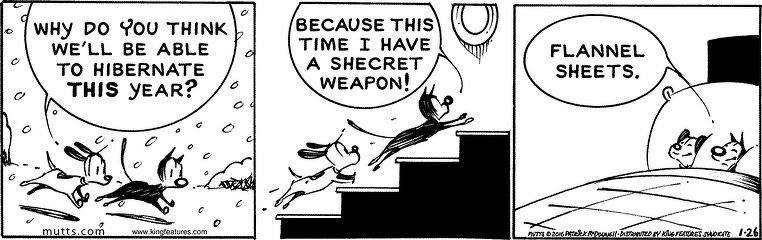
This made me think of Carla.