love verb 1 to esteem someone or something as to be gladly willing to donate of one’s self (e.g., attention, energy, time, material resources, money) for the their good 2 to esteem someone or something as to prioritize their needs
“Sexual puritanism is an attempt to safeguard possessions more valuable than pleasure. The good that it does outweighs the evil, the English knew this. They were seriously repressed, largely because repression prevented them from carelessly throwing away those things—chastity, marriage and the family—which slip so easily from the grasp of people whose natural tendency is to keep each other at a distance.”
— Roger Scruton, “English Character” in England: an Elegy
“I often think our broken church/social structures reflect our homes. Families teach us that even when are different and disagree, we are one.”
For us who are heterosexual, the task as it regards the sexual behavior of our brethren who are homosexual or bisexual is to support their clean conscience. If I am open and affirming of chaste homosexual expression but my gay friend is not, I will not try to persuade my gay friend toward my point of view. I will support him in his efforts to keep to the ethic he thinks is right. See Romans 14.
The bulk of the New Testament is not about how to get to heaven.
Regarding the temptation to read everything there is to know about the state of our government and then make public comment—and anything really: Do nothing out of mimetic desire. Do it only if it is truly self-donation for the benefit of another or others. Not merely virtue signaling and group belonging. Not merely imitation. I’m glad Jason is writing what he is writing and that it’s helping folks. But I don’t need to.
I am worried that I am playing the part of a quietist. But I strongly believe in the importance of building our kingdom-establishing institutions (e.g., blood donations, churches, relationships) in stable ways. I do not need to comment on current events unless love compels me.
I’m through with performing music for only the bourgeoisie. It’s time to visit prisoners and sick folks and sing for them.
Reading Twitter will ruin my life.
“May we” is a way to say prayer, blessing, and exhortation all rolled into one.
“Your faith has saved you” (Luke 7:50). I realized the other night that there is a sensical way of summarizing faith’s role in healings and miracles: It’s not always necessary (cf. Acts 12:12-16), and it’s not always sufficient (cf. life), but sometimes, it’s definitely the clincher.
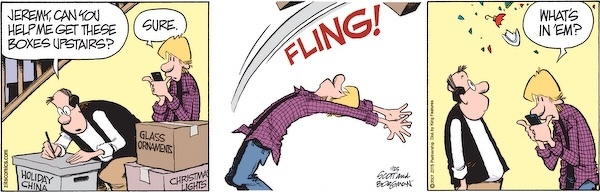
He who hurries his footsteps errs, indeed. Spurty much? This reminds me a me. It is such a joy to exercise my spurty strength, but it is often a mess afterwards. I should not act like this, as funny as it is.
Date: January 18, 2017 at 3:12:43 PM EST
colleague: FYI no issue with Gus Mady, he just wasn’t tilting his cab panel back enough to get the hinges on. =) he called a apologized a hundred times. He’s super nice.
me: Good. I’m glad you asked again.
colleague: me too. and thanks for you help too
me: You’re welcome. Glad he and I spoke. I probably wouldn’t have the chance to meet him at NTEA if I didn’t field his call.
colleague: divine appointment!
me: That makes me think: I’d like to treat all encounters as divine appointments—to treasure each human interaction as an opportunity to communicate with someone of unsurpassable worth, a bearer of the image of God
colleague: PREACH!
I decided the above exchange was worth spending some work time on. I haven’t known what to say when people assert that a lucky encounter is a divine one. But now I do.
It isn’t necessarily that we’ve said yes to too many things, although sometimes that’s true. It’s that no matter how I slice it, there are always things I’m not doing, rest I’m not taking, and people I’m not relating to.
Partially reformed perfectionist’s hack: Remind yourself it’s imperfect to be a perfectionist.
“Questioning involves courage, refusal to allow one’s beliefs to be challenged involves fear. And so which should be called ‘faith’ and which should be called ‘doubt’?
– James F. McGrath, “Doubt in Faith’s Clothing”
“[T]o say that God turns away from the wicked is like saying that the sun hides itself from the blind.”
– St. Anthony the Great, as quoted by Stephen Freeman in making the point that the talk in the Bible about God’s wrath is metaphorically referring to the natural consequences of separate from Him, not Him actually whooping us
You say you care about the poor?
Then tell me, what are their names?
— Gustavo Gutierrez, as tweeted by Jarrod McKenna
Do not marry unless you can without any doubt decide to commit the rest of your life to that person.
We are lonely and feel busy because we resent not being sufficient as islands and because doing something means we’re not doing a million other things.
You know, I just queued a recurring task for Sunday evenings: “Set this week’s read-and-reflect time.” But methinks it a better approach to remind myself that the apt time is almost always now for stopping at whim for people, God, rest, or recreation. Do what you want.
Next someone asks “How’ve you been?” and you’re about to reply “busy,” try saying “overcommitted” instead. It might serve as a humbling, epiphanic, change-enabling confession.
It’s a really good idea to swear off screens for Sundays, at least through bedtime.
Twitter is a way to surround yourself with the most interesting people in the world—to the detriment of your engagement with the people around you.
Stick to the plan, that’s all. Just stick to the plan.
“People will forget what you said, people will forget what you did, but people will never forget how you made them feel.”
— Maya Angelou