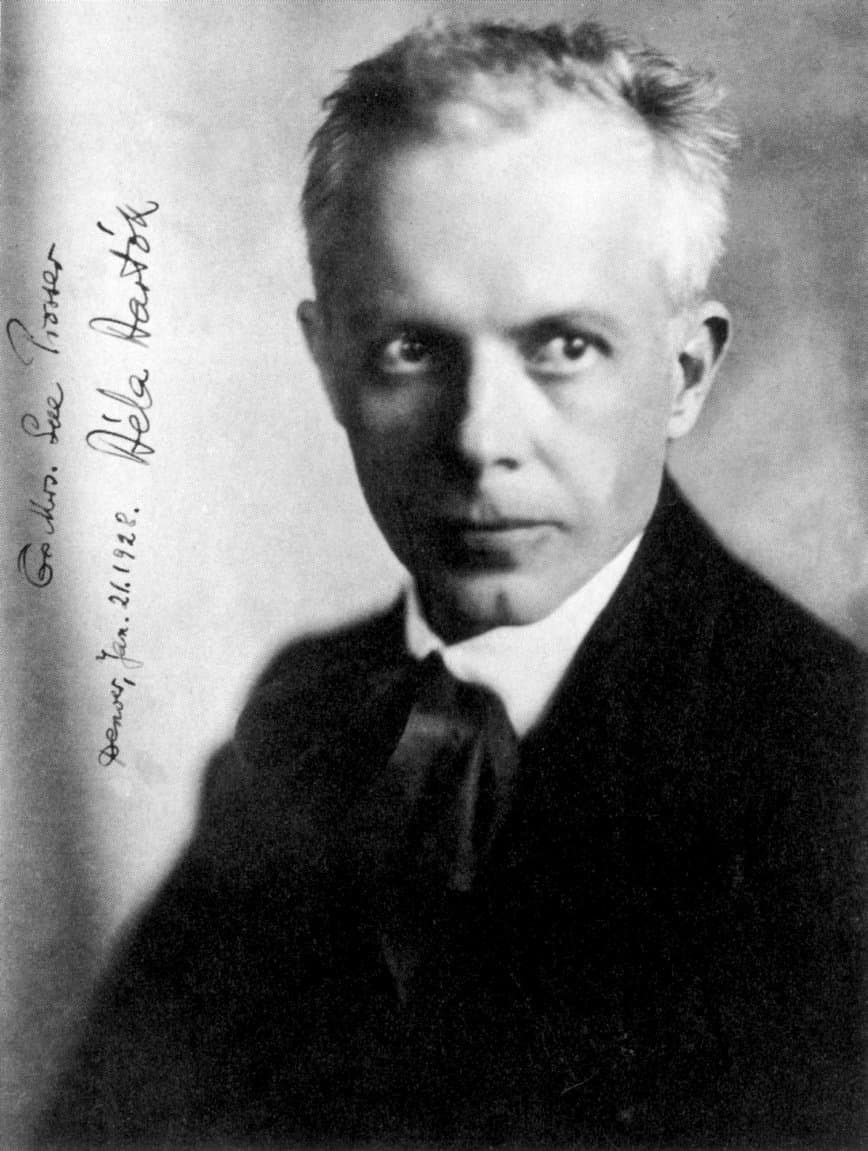
Béla Bartók is an imp.
I lack the vocabulary and leisure to write much about the cracklingly alive music of the great 20th-century Hungarian composer Béla Bartók, seven hours of whose greatest music can be found in this playlist. But what I can tell you is that he comes across to me as an intensely focused über-Puck, as ingenious as he is impish. He alternately grins maniacally and aches with grief as he employs chromaticism, weird harmonies, percussive pianism, asymmetric meters, novel bowings and pluckings (including one named after him), oddly located sforzandos and other displaced accents, and a dozen other tricks from his rather large bag to make all kinds of unexpected musical turns. He hides peasant tunes in music that pushes tonality just shy of its breaking point. He makes life fiendishly difficult for violinists and pianists.
To some, like my friend Travis, who has been a great sport to listen all the way through Bartók’s repertoire with me, all the above is in service to nothing more than making mischief on the human ear. To me, in its own, arch and difficult way, Bartók’s music captures the joy and sorrow of living.
Carla, the lovely, lateral thinker that she is, having heard some snippets, compares Bartók to free jazzmen. It’s an apt comparison—except that they’re improvising, and he wrote all his mischief down. I’m not sure which is more impressive.