Some people says “funny” when they mean “making a curious or disagreeable choice.” “Laughable” or “risible” would be the better, more honest choice.
You can almost see the Sherlock characters’ eyes: I’m doing this only because the writers are making me.
If, when I’m old, you were to ask me to tell you one thing about my life as it was today, I predict I’d tell you that Carla was reelected today. I’m glad for her and proud of her.
Titillation and puzzlement and not virtues of fiction, Sherlock.
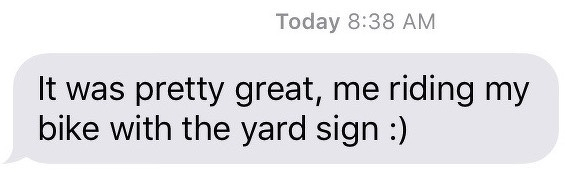
Yes, Carla. Yes it was. You are pretty great. Congratulations on your victory.
I don’t want to watch any more Sherlock. The show has reached comic-book levels of convolution after just two seasons that simultaneously fascinate and bore me at the same time. The boredom alone is reason enough to discontinue watching, and the fascination is distracting in the same way every other superhero franchise is.
Convolution ≠ intrigue.
A major plus about “Maria”: its highest note, a B♭, happens on the syllable “ma,” which is about as friendly a high-note syllable as one could request.
If, when I’m old, you were to ask me to tell you one thing about my life as it was today, I predict I’d tell you we had our 72-year-old next-door neighbor Janet Donald over for leftover Stilson rotini dinner, homemade quick bread, a thirteen-year-old shiraz Janet had donated to us a month prior for Carla’s birthday, and some after-dinner Dixit at the kids’ prompting, all while piano jazz played on Spotify and the thermostat was set to a balmy 67°F.
I told her I love having her over.
Did I say it because I love the feeling of moral pride it gives me to know I have my aged next-door neighbor over for dinner and counter her as a friend? In part, yes. But I also said it because I really do like her.
“Now you together are the Messiah’s body” (1 Corinthians 12:27, KNT). In other words, I extrapolate, we are how Jesus acts on this earth.
As much as I’d like to start posting about what is lost when we use transliterations like ‘baptism’ and ‘apostle’ instead translating them “immersion” and “emissary,” I am inspired to start thinking in terms of positive formulations of my faith, rather than critical ones. OK, Scott, we know what you don’t believe: What do you believe?
Why do I assign standing priorities to all tasks in my to-do list, contra David “GTD” Allen’s advice? Because otherwise I would always choose that which is most easily checked off rather than what is most important.
Matt Poehner has the following quotation on his Facebook profile:
Live a good life. If there are gods and they are just, then they will not care how devout you have been, but will welcome you based on the virtues you have lived by. If there are gods, but unjust, then you should not want to worship them. If there are no gods, then you will be gone, but will have lived a noble life that…will live on in the memories of your loved ones. I am not afraid.
— Marcus Aurelius
I can get behind that.
Clinging to a Man who is no longer perceptibly with us is not a sufficient ethic, as the very fact that we have the term “aberrational Christian or Bible-based groups” attests. It’s too loosy-goosey. People can make stuff up about what He is saying. Therefore, we must hermeneutically extract principles from His biographies.
If, in my old age, you asked me to tell you one thing about my life as it was today, I predict I’d tell you it was the day I metaphorically threw my hands up in the air about whether I have a principled reason for supporting Friends & Farmers Food Co-op: I don’t. I support the co-op because I enjoy hanging out with those kinds of people at the kinds of functions they hold.
I could go into my reasons for suspecting that “buy local” is a slogan with slippery ethical foundations (hint: for a start, it smacks of egogeocentrism), but I think I’ll leave it at this: I buy local for the pleasure of it. That’s all. It is a luxury. It makes my community a smilier, more human place.
Completism is not a fruit of the spirit.
I shall not be ashamed of saying God healed the people I read about or that God spoke to Carla about such-and-such. I may have to fall back on one of McHargue’s maxims, but still. It’s better than shying away from calling it God. And I need You, God. It used to be a luxury I was requesting; now it is a necessity. I need to experience You. I can point to my good life and say You gave them to me, but that’s not the same thing.
This journal might as well be called “Scott tweaks his life.”
On God
Personifying the highest good is very motivating, even if it’s false (which I don’t think it is, but it might be).
I thought of a good rule of thumb: I should set aside dinnertime to the kids’ bedtime not only as unstructured leisure time, but also as “spend as much time outside as possible” time.
If, in my old age, you asked me to tell you one thing about my life as it was today, I predict I’d tell you it was a day I had intended to go hear Paul McCartney play at the Bryce Jordan Center—his first and probably last concert in State College, PA—but had neither found someone to go buy scalped tickets with (Carla was at a Council meeting) nor communicated well with the babysitter, Molly Hunter, who wasn’t going to have a ride home. Top that off with a $475 bicycle maintenance bill earlier that day, and you get me canceling with the babysitter at 6:30 p.m. It helps that I’ve never cared much for arena concerts and that the babysitter had four big exams happening all the next day.
Such is life when you prioritize: Some things go neglected. And very often they are the things that should go neglected.
I wake up almost every morning these days with a shot of anxiety running through my middle. My inkling is that it stems from always doing and never resting. Is that it?
Carla says when she feels that way, she takes it as a prompt to pray.
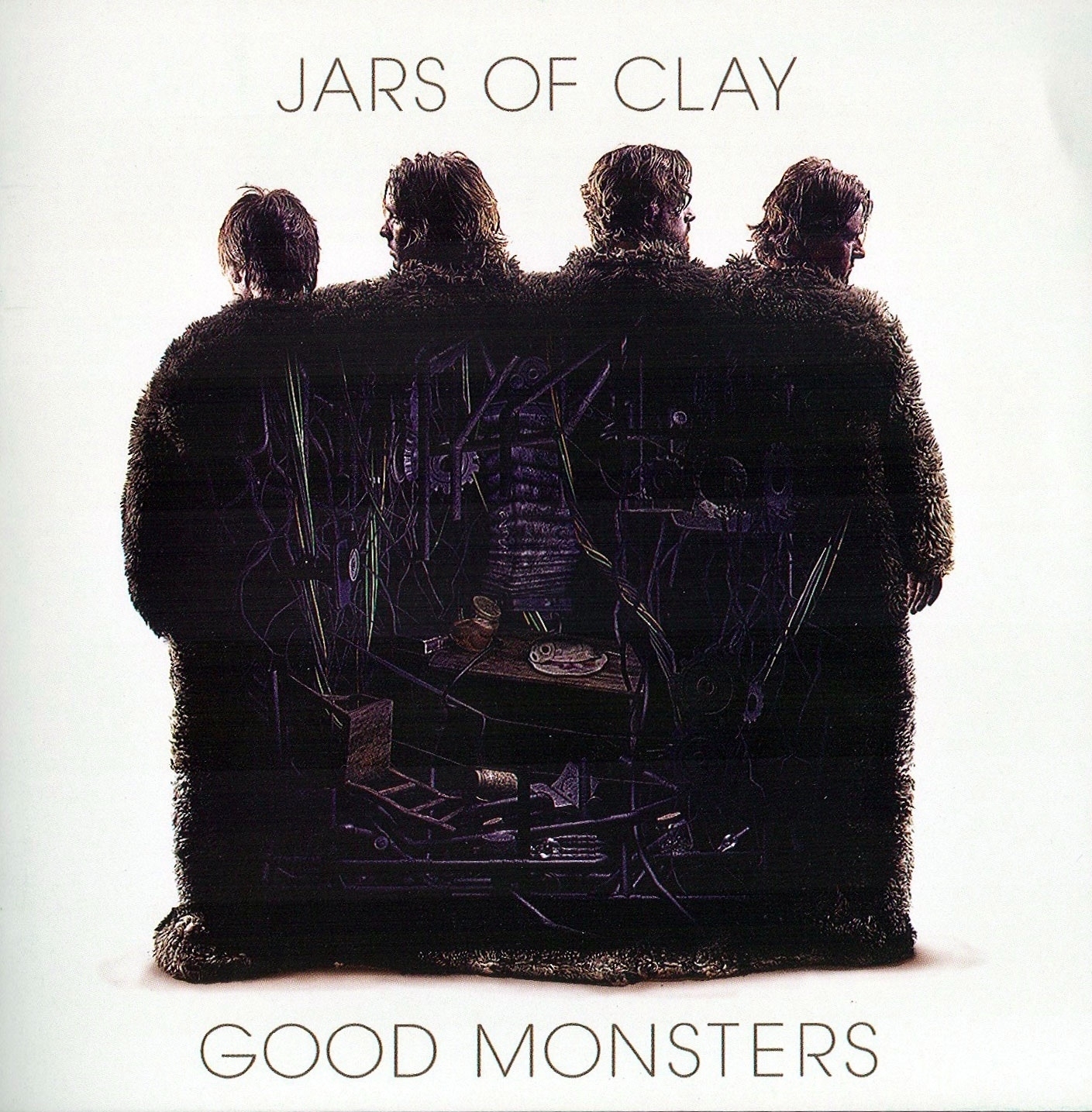
There’s plenty of high-quality Christian music out there. Why not spin it more often? Listening to a few Jars and Crowder tracks this evening reminds me that I need not be shy.
The same Red Cross nurse who had turned me away last year for having an open, stapled porthole wound on my pate turns me away again for having apple-harvest scratches on my arms.
My favorite thing is to make that piano reveberate [sic] like an explosive bāss violin.
— Sullivan, pronouncing “bass” like the fish, explaining what he loves about playing his new instrument
No, no, no, your ridicule is quite powerful. I appreciate it, actually.
— Scott, to Carla