Shame and guilt can be healthy, life-giving emotions. There’s a reason we have them. Sure, shame and guilt can become toxic and debilitating. But let’s not think that there’s something unhealthy about feeling shame or guilt when you do something that violates your conscience. That’s called being a human being.
“In distinctive contrast in the midst of the ancient world, the Jews will sacrifice animals to God, but never their children. And that’s a moral revolution in the history of the world” (Richard Beck, “On Genesis 22: Give the Story a Little Respect”).
Love is hardly love if it is lazy.
My reflections on excerpts from A Grief Observed (1961) by C. S. Lewis
The death of a spouse after a long and fulfilling marriage in quite a different thing. Perhaps I have never felt more closely the strength of God’s presence than I did during the months of my husband’s dying and after his death. It did not wipe away the grief. The death of a beloved is an amputation. But when two people marry, each one has to accept that one of them will die before the other (xii–xiii).
Such insightful and poetic words from Madeleine L’Engle. It is true: Either Carla or I will predecease the other, and that will feel like an amputation.
Reading A Grief Observed during my own grief made me understand that each experience of grief is unique (xiii).
I must remember that as I age and my friends’ spouses die.
// read full article →Like Lewis, I, too, kept a journal, continuing a habit started when I was eight. It is all right to wallow in one’s journal; it is a way of getting rid of self-pity and self-indulgence and self-centeredness. What we work out in our journals we don’t take out on...
“…[w]ith humility of mind regard one another as more important than yourselves…” (Paul). This is a crucial verse for me if I’m going to bear the fruit of love. It’s this regard of others as more important than myself that is going to turn up my inner hearth of love for others. Without that phrase, my love risks being too mechanical, too principled. If I can honestly regard others as more important than myself, I will fulfill the second Great Commandment.
To love = to give a damn about (1) the good of and/or (2) the enjoyment of relationship with
I’ll at least put the Irish places we visited in order, with the idea that maybe I’ll make a little route map later:
Dublin
- Dublin Airport
- Dollar rental car
- Lo-Cal Kitchen
- Navan Road Station (not)
- Fleet Street Car Park
- Trinity College
- (Sirocco’s in Tullamore)
Clare
- backroads of County Clare
- Sea Mist
- MACE in Lisdoonvarna
- Doonagore Castle
- Doolin Chocolate Shop
- Doolin Coastal Walk (2x)
- Doolin Pier
- Doolin Ferry
- Inis Oirr
- Inis Oirr Bike Rental
- convenience store
- seal colony
- south end of Island
- St Edna’s Well
- Inis Oirr Hotel
- the Plassey wreck
- The lough
- Stone paths everywhere
- School playground
- Fudge shop
- Doolin Ferry
- Cliffs of Moher (bottom)
- Stonecutter’s Family Kitchen
- Sea Mist
- Paddy Wagon
- Cliffs of Moher (top)
- Hags Head
- O’Brien’s Tower
- Doolin Coastal Walk
- The Ivy Cottage Restaurant
- Aran Sweater Shop
- other shops
- stop in Burren along coastal drive
- Doolin Cave
- Fanore Beach
- Burren Coastal Drive
- Poulnabrone Dolmen
- Sea Mist
- music shop?
- other shops
- McDermott’s
- McGann’s
- Coastal Walk
- Sea Mist...
I just read that attraction is common in cross-sex friendships, especially in men. I write this because it helps me know whether I was an oddball in my younger days for being attracted to just about every girl or young woman with whom I was good friends.
I like retelling the events of the day with the kids and Carla. It is enjoyable. Plus, it helps me remember later.
“Given the issue is so fundamentally important to our view of who we are, a claim that our free will is illusory should be based on fairly direct evidence. Such evidence is not available.”
— Benjamin Libet, in a 1999 quotation I found via a current article in The Atlantic today that blows away the Goliath in the room of the question of the soul
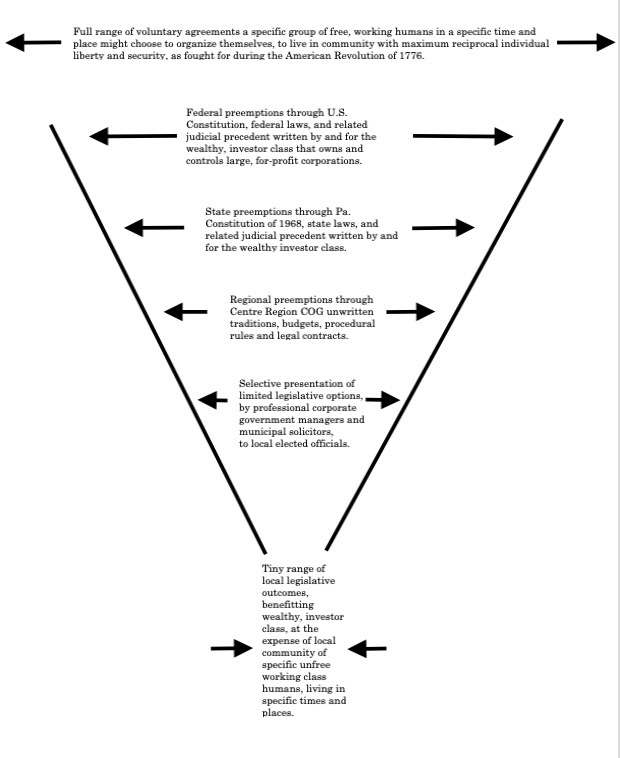
I don’t usually like what Katherine Watt writes. But this illustration is dynamite good.
Carla: [Saint] Paul totally bonked. He was a-bonkin!
Scott: Paul wasn’t bonking.
Carla: C’mon. You know he was bonking!
Scott: You are the strangest Christian wife I could have acquired.
Some notes from Prayer (2006) by Philip Yancey
On the interconnectedness of everyone and everything:
I live in a web of dependence, at the center of which is God in whom all things hold together (34).
That’s a good way to explain to myself how it is I can be grateful to God for everything that is good, including existence itself.
On prayer as worship:
Prayer is a declaration of dependence upon God (35).
An idea from my girlfriend my freshman year of high school returns: Making requests of God is a form of worship. It has proven one of those stick-with-you, life-shaping ideas. Thanks, Katie.
On emotion being teachable and malleable:
But consider what Rabbi Abraham Heschel said to the members of his synagogue who complained that the words of the liturgy did not express what they felt. He told them that it was not that the liturgy should express what they feel, but that they should learn to feel what the liturgy expressed.
My super-culture insists that emotions just happen and should not be repressed or feared. I agree with the...
// read full article →“Trusting in God does not, except in illusory religion, mean that he will ensure that none of the things you are afraid of will ever happen to you. On the contrary, it means that whatever you fear is quite likely to happen, but that with God’s help it will in the end turn out to be nothing to be afraid of.”
— Jonathan Aitken, as quoted by Philip Yancey in Prayer: Does It Make Any Difference?
“‘Come near to God and he will come near to you,’ wrote James, in words that sound formulaic. James does not put a time parameter on the second clause, however.”
Distractions [in prayer] are nearly always your real wants breaking in on your prayer for edifying but bogus wants. If you are distracted, trace your distraction back to the real desires it comes from and pray about these. When you are praying for what you really want you will not be distracted.
— Herbert McCabe, as quoted by Philip Yancey
But consider what Rabbi Abraham Heschel said to the members of his synagogue who complained that the words of the liturgy did not express what they felt. He told them that it was not that the liturgy should express what they feel, but that they should learn to feel what the liturgy expressed.
— Ben Patterson, as cited in Philip Yancey’s Prayer
Carla cried “tiring” to hear my say that yet another purely social gathering was without a point. But I stand by it: I don’t want to invest time in people except insofar as it builds Your kingdom, God. I feel excited to cultivate our relationships with some folks because the growth of Your kingdom among us when we gather is effortless. I’m not looking for people with whom I simply have an enjoyable time; I’m looking for people with whom I can say, Look! God is among us doing stuff.
At the level of the individual, there is wisdom in my friend’s aversion to marriage, which she stated the other day as “I don’t know why people would want to get married.” I prefer to reword it as: “Don’t make a commitment you don’t think you can keep.” But at the level of society, there needs to be a complementary wisdom: Cultivate people who are capable of making lifelong commitments.
“Prayer is a declaration of dependence upon God.”
— Philip Yancey
My new motto in life is: If it’s not worth doing for free, it’s not worth doing!
— Carla, to Frank
I have decided to drop all items from my to-do list except those things which must be done.
My new definition of love: to devote oneself to the good, wellbeing, or flourishing of and the enjoyment of relationship with.
“We are sending our young people into the marriage bed as virgins (good) but also as morons (bad).”
With the advent of Rivian electric pickup trucks, not to mention Tesla’s plans and Ford’s all-electric F-150, my appetite for a new vehicle has finally come. But it’s better for the environment for me to run the Mazda into the ground first. So hold up, lil’ dogie.