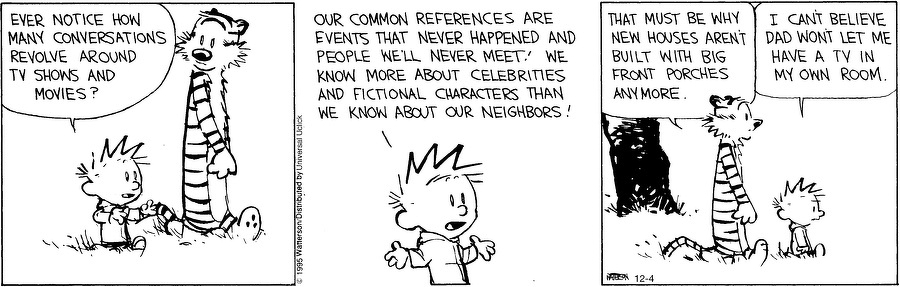
I feel a certain reorientation in my reading life these past two days, and it has to do with love. If I am to do everything in love, then I am to:
choose what to read in love, that is, in thanksgiving that there are so many good books from which to choose,
choose what to read for love, that is, thinking of the books’ relative capacity to facilitate or express my love for God and love for others—by which I mean specific others around me, not just books that will answer questions raised by what other people on the Internet are thinking about,
read savoringly, because to do so any other way is a waste of time that benefits no one, including myself, unless I’m reading purely for information, and is therefore unloving. Reading for understanding, entertainment, or aesthetics doesn’t even happen if I don’t read savoringly.
read only at times when I can read savoringly, a constraint which will have the added benefit of making my responsiveness to the actual world around me much better and thus my actual total quantity and quality of love in any given day.
Also, when I switch to reading articles, I should be selective enough with my Instapaper queue that I find it easy to pay close attention to each article I do read and I get through it all in a timely manner. Basically a miniature version of the above rules.
With movies, it is easier:
I love God while watching movies because I watch them in thanksgiving.
I love Carla while watching movies because she wanted time to watch movies together to be a part of our life. We wouldn’t be watching movies together if I didn’t like her.
Movies are shared activities, if passive ones. They are much easier therefore to meet the “to the enjoyment of relationship with” portion of my definition of love.
Thank you, Ethan, for requesting employee input ahead of annual reviews. Thank you, Éa, for being up for me walking the mile and a half to school today after you had a bellyache that kept you off the school bus. Thank you, Carla, for being someone to admire, you doula, preschool teacher, mom, councilwoman, and tumbler. Thank you, God, for making the problem of evil and the problem of unanswered prayer seem small today. Thank you, Bones, for delicious bread and fun times. Thank you, Frank Capra, for making It’s A Wonderful Life, which we plan to watch this Friday on Blu-ray. Thank you, Sony, for developing the Blu-ray format.
Carla and I watched Transcendence (2014) last night as per Instructions. It probably couldn’t have been more perfect taken as a message from God: People think Him less than human and misconstrue intentions. But, as Paul Bettany’s character Max says at the end of the film, ”He created this garden for the same reason he did everything. So they could be together”—the “they” being us. His intentions are purely loving and beneficent, even if His methods are foreign to us.
And that’s just the core of what you can take from it. It can get much richer than that.
I am grateful for the brief moments of fun Sullivan and I had at the edge of Struble Lake today playing with the Harbor Freight “Neptune” RC boat that Dad had bought a year or two ago. I should emphasize brief moments the remote control started smoking and stinking through the inverter switch ports after about one trip out and back by each of us. But that was most of the fun! For the sake of continuing relationship, I should remember to ask Dad about the results of his postmortem on the remote.
I am grateful for the folks at PBS Kids, who air such entertaining, sweet-hearted children’s programming as Curious George and Wild Kratts, both of which enjoyed alongside Kathy and Uncle Mike while sitting at the kitchen table at Dad’s house today.
I am grateful for the moment of clarify I had reading Romans 14 this evening: If I let Paul’s use of the word “doubt” (diakrino) in vv. 22-23 interpret James use of the same word in James 1:5-8, then it is clear that Boyd’s thesis about “doubt” not being synonymous with uncertainty is true.
Actually, reading all of Romans 14, which touches on ritually-based vegetarianism and people following their own consciences, was exciting.
I am grateful for the light resolution I made while on my evening walk tonight that I can thank God for everything good and usually thank someone else for everything, too—a resolution I put into practice by thanking Christian Carion for making Joyeux Noël, which we watched with the Rookes last night.
I am grateful for Carla, whose beauty and diligence inspire me.
If, when I’m old, you were to ask me to tell you one thing about my life as it was today, I predict I’d tell you it was I day I think—I hope—I turned a corner in my character. You see, since screening the finale of the second season of Gatiss & Moffatt’s Sherlock this past Saturday, entitled “The Reichenbach Fall” (and probably a good bit before then), I had been obsessing over the show: obsessing about its plot, obsessing about its characters, obsessing about its actors, and obsessing about its writers. I was obsessing about my decision to stop watching it because of my obsession.
I needed to be rescued from all this.
And it’s more than Sherlock: In recent months, I have spent far too much time and attention setting up operating systems, selecting an iPhone case, and other such minutiae. I prioritize trivialities. And it robs me of life (and steals from DiamondBack).
We have overcome perfectionism. We have overcome stoniness. We have overcome self-distraction at work. We have overcome religious doubt. (All of the above are still works in progress, but they are works well on their way with clear paths to completion.) Perhaps now we can take on obsessiveness and the resulting misprioritization.
Deliberation, yes: You do that about problems and decisions. Cogitation, yes: You do that about profundities. Obsession, no: You do that, by definition, with things you ought not to. And I know what it feels like.
If you’re going to obsess about anything, do it about giving yourself for the benefit of other people.
I don’t want to watch any more Sherlock. The show has reached comic-book levels of convolution after just two seasons that simultaneously fascinate and bore me at the same time. The boredom alone is reason enough to discontinue watching, and the fascination is distracting in the same way every other superhero franchise is.
If you asked me in my old age to tell you one thing about my life as it was today, I’d tell you that it was the day Sullivan and Éa enjoyed their first feature-length film: the delightful-in-concept-and-execution Monsters, Inc. We watched it at the Peters’ house after church because Josh and his new girlfriend Esther were watching it. They kids sat on our laps most of the time. Carla provided some commentary and educational questions for the kids along the way to help them process.
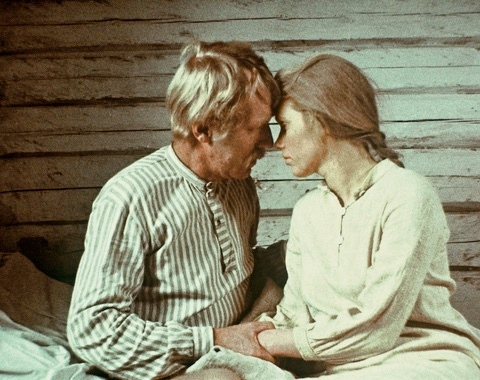
I woke up Sunday morning with Max von Sydow’s name in my head and an inkling that this name might be a hint from God. All I remembered upon waking was that he was an actor or a director. On Wikipedia that morning I discovered he played the knight in The Seventh Seal, Jesus in The Greatest Story Every Told, the villian in Minority Report, and Karl-Oskar in Troell’s 1971 film adaptation of Moberg’s The Emigrants. I read no further in the Wikipedia entry because I felt the reason I was to be thinking about von Sydow was contained in this opening paragraph’s list of his most notable movies.
I wasn’t sure at first what God might be getting at and asked Him to clarify which film was of interest to Him. It became clear upon further reflection: It was The Emigrants. Carla has recently enjoyed three of the four novels in that series and often talks of how she wishes I could read the books she reads so we could share in them. And I had just the other night and several recent nights before asked God to restore the love between us and help me to love Carla well. Watching the film adaptation of these novels that Carla so appreciated with her would be a away to proactively, creatively love her.
So I set to finding a copy. All I found were a few VHS copies in a libraries across the Commonwealth. But later that morning I opened one of the blue desk/TV stand drawers looking for software for Éa’s new keyboard and found along with the CD-ROM I sought a pair of DVD-Rs that Greta had given us for Christmas that contained The Emigrants and The New Land!
Could Greta have mentioned von Sydow’s name upon presenting the gift to us a few weeks ago and my subconscious mind surfaced it on its own, either in self-answer to my prayer or totally randomly? Yes. Do nonetheless I believe that it was the Holy Spirit giving Carla and me—especially me—a little gift in answer to my prayers about loving Carla and about Him talking to me and making Himself more real to me? Yes.
Just watched: La Grande Illusion (1937) directed and co-written by Jean Renoir.
What is the great illusion? Is it national borders? Is it the idea that this war would be the one to end them all? That war can be gentlemanly? That war is worth it?
Anyway, this movie stands alongside The Best Years of Our Lives, Dr. Strangelove, and The Bridge on the River Kwai as one of the best antiwar films I’ve seen. (I haven’t watched Apocalypse Now yet.) But less like Strangelove and more like Best Years of Our Lives in that all the characters are very human. These are people fighting, dammit. Makes me want to rewatch The Rules of the Game because Renoir is so good. Perfect, transparent acting. Bonding people across class and nationality, yet sometimes having to stick to those, too. In the end, So very human. A perfect film. Definitely worth watching. If this was Jean Renoir’s outlook on people, we could all stand to learn. Finally, a French film and a French director Carla and I enjoy with no reservations! Full of bits of philosophy that are never heavy-handed.
It is curious that we never see the life of a foot soldier in this movie. But I suppose you write about what you know. But we do see a black man. And refreshingly, he is not a buffoon or a mammy or any other black stereotype.
A New Yorker writer: “Sophistication at the service of innocence, not cynicism or chic: That’s the glory of “Grand Illusion” as a narrative, a showcase for transcendent acting, a piece of philosophy in action, and a leap into pure cinema.”
Some tired thoughts on this Swing Time (1936), which is the first film Carla and I have repeat-watched from the greatest lists. Is Swing Time worth watching? Yes. Like we did with Top Hat, we shared some of the dance numbers with the kids. We weren’t sure what to do with the Bojangles number at the time; Wikipedia now tells us that the Bojangles is a real person to whom (with one other guy) Astaire was paying tribute, not aping. Carla and I agree it’s the better of the Astaire-Rogers films we watched, although I’m more tickled with the dancing in Top Hat. It’s the faces, though, in this one, like Ginger’s when she comes to plant a kiss on Fred in his dressing room, fails, and then they kiss behind a closed door. Close-ups of Fred toward the end when he finds out Ginger is going to marry the Metaxa character. Fred Astaire looks more like JImmy Stewart in this one. We shared the dance numbers with the kids. Interesting how central a role cheating plays in this one. More believeable, this one. Again, those dresses. Must’ve been quite the pick-me-up during the Depression. Worth watching.
I hypothesize that the reason folks like me are OK with watching movie violence and less OK with watching movie sex is that the latter arouses feelings and potentially even action, while the former does not.
Carla and I failed to find Abel Gance’s Napoléon for gratis streaming online, so we talked on the loveseat about same-sex marriage, our church, the knowledge of good and evil and whether, and Psalm 91. We enjoy one another’s company and thoughts and genuinely admire one another. (Carla cleaned up dried sewage from our basement floor this afternoon.) As I sat down the kitchen table to close the day with a journal entry, we had the following nigh-Familypants-worthy exchange:
Carla: I like Josh Ambrose.
Scott: He’s always playing the educated agnostic.
Carla: I like that.
Scott: That’s because you’re an educated agnostic.
Further evidence that I just need do what I want to do: I felt lighthearted and happy when Carla and the kids returned from hanging out at Peters’ house and I was just wrapping up my Saturday to-do list.
By why should a list of tasks weigh on me so?
Anyway, we capped an evening of work on the Choral Society website and a watercolor portrait from a photo of Éa with the perfectly oneiric, rightly acclaimed, but not all that entertaining Un chien andalou. We’re nearing the end of the silent film era in our quest to watch our chronological way through the BFI Sight & Sound 2012 Critics’ Poll.
Carla and I disagree about the overall merit of The Hobbit: An Unexpected Journey (2012). It comes down to this: I want an artist to do these adaptations. Peter Jackson is more like the captain of a theme park boat ride.
After another Christmas morning, an afternoon wave of sleepiness, and a delicious, heartfelt Christmas feast courtesy mostly of Mom, the Stilson siblings, Felix, and Carla went to see the above movie as our gift to one another. It was a good one, and I hope it’s a small beginning in a new tradition: My siblings and I purposely spending time with one another when we’re around. Carla is much better at that than I.
I feel a certain loneliness today, a longing for fellowship. It’s probably because Carla is sick and spent most of the day in bed, although it feels like I’ve been missing something for a while now, a need for a best friend with whom I share not only interests, proximity, and mutual affection, but also approach to God, approach to self-conduct, and way of thinking. No friend of mine thinks like I do. Ethan is the closest I can think of. Perhaps I need to drop him a line.
Nonetheless, Carla and I did finally finish Greed (1924) this evening together. It was an excellent film that prompted me to pray, “Lord, please keep us from being deceived by money.”