I remind myself how much richer a reading experience is when it is read aloud. I missed Ahab’s boat in Moby Dick; I’m not going to miss Licona’s resurrection train.
New protocol: Whenever I lend something, I will note that I have done so as a task to get it back, not in a standalone list of things lent, which never gets looked at. Similar thing for borrowed items.
This afternoon and evening were unhappy. It could be that I stayed up till a bit past 11 last night chitchatting with Carla in bed. But I think it’s more because I hewed too closely to my daily task list. More importantly, I didn’t hew very closely to You. There are times when I get “too efficient,” as Carla says, capturing task items very well but ignoring priorities, ignoring my heart, ignoring my desires, ignoring You. Why, today I could swear Carol requested my help in her remembering her frozen water bottle before she leaves tomorrow morning on her bus ride home because she saw that I am so robotically dedicated to my very reliable task list. But I’m a man, not a machine. I don’t ever want to lose my connection to You, or to the people around me. Let me be alive, not always working.
Maybe Watchman Nee is more correct that I thought, with his proposed dichotomy between living by the principle of right/wrong versus living by the principle of life. I still think it sounds too mystical.
The capsule reflection on that pamphlet that I posted to Goodreads: “I object strongly to the dichotomy introduced between decision-making based on right vs. wrong and making decisions based on “life,” whatever that is. Nevertheless, the pamphlet served as a reminder to me to not trust in my to-do list and trust instead that God is inside me, at work, and that referring to Him is the best way to make decisions.”
Since Licona will be using plausibility “as the most important criterion” (p.113), his chapter entitled “The Historian and Miracles,” which comes up next, had better be good.
He also says that since to hypothesize a real resurrection of Jesus is to hypothesize a singular event, you can’t apply Bayes’ theorem because you can’t asses the prior probability of a unique event (p. 120). But what if your hypothesis is that the report of Jesus’ resurrection is false? Couldn’t you assess the prior probability of a resurrection report’s falsehood by looking at other the veracity of other resurrection reports?
My aversion to academic writing under deadlines is what doomed any thought of me becoming an academic myself, but a love for academic reading could make this book the first in a long run tomes that pass through my house by way of my friends-of-Penn-State library card.
A few critical notes as I dive back in to Matthew McCormick’s book:
- Concision carries rhetorical power. And McCormick is concise.
- I agree that miracles don’t happen nearly as often as I wish they would or think they should. But that doesn’t mean they don’t happen. How do I account for some of the miracles my friend Marshall describes (i.e., the rain stopping, the word of knowledge for the divorcée, and the healed tumor)? How do I explain the healing ministry of Heidi Baker?
friend:
I just wanted to let you know that my thoughts have been with you after hearing about your sleepless night. I think I understand the sort of turmoil you are in; I’ve been deep in it for a while!
I would be delighted to talk more…and/or to let ideas and feelings percolate as needed.
self:
Thank you for your sympathy. You and your husband are good people.
That it wasn’t until thirty-three years old for this devout Christian to experience his first pangs of doubt probably accounts for why it was so intense. It was a doubly novel experience for me: my first doubts and my first involuntarily sleepless night. A doozy I don’t hope to relive.
But now that I’ve slept some and my thoughts have settled, one could say in summary that not much has changed: I am simply less sure of all my Christian beliefs. Still, it’s strange to pray to a god you’re less sure exists. His hiddenness used to be a source of knowing laughter in prayer. Now it’s a bit more serious than that.
Anyway, I currently plan to pause on the McCormick volume until Sunday or so. We’ll see what happens as I continue reading. You still plan to finish, yes? In the apparent absence of a volume directly responding to it, I still plan to read this Licona volume from 2010 as its companion. I have requested a copy from Schlow via interlibrary loan.
One thought I don’t want to forget jotting down: McCormick speaks of an amazingly powerful, biologically seated Urge in people that’s at the genesis of all religions. I say if the we have the Urge, whether it’s God-given, biologically endowed, or both, why not find its best outlet instead of trying to stuff it?
Another thought: Historically, I have a very low tolerance for being unsettled: I’m the guy who unpacks all his belongings into the hotel dresser drawers for a two-night stay just for a sense of settledness. So I don’t plan to stay here long. Hopefully our exploring this together will help you, too, to leave this turmoil and reach solid ground—whether that’s at the mouth of an miraculously vacant tomb or not.
Finally, let me reciprocate: Send me thoughts, ideas, feelings whenever you wish at whatever pace you wish. I have a deep love for deliberation and collaboration as a means of truth-getting.
When I restart my reading of Atheism and the Case Against Christ, I plan to actively take critical notes along the way. To fight back, as it were.
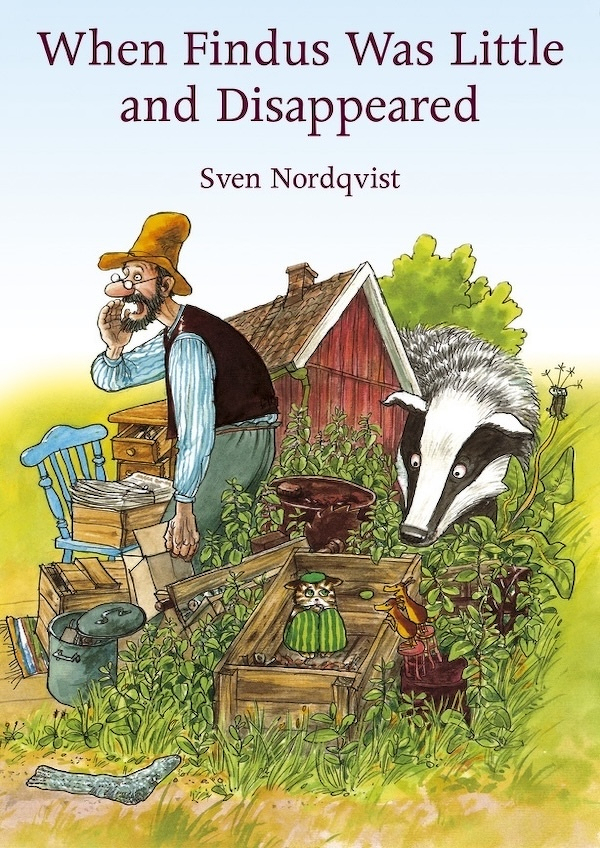
One of the most exquisitely illustrated books I’ve ever read. With charming characters, to boot!
Brave New World is an excellent book so far. And there are effable things I think I’m learning from it, too. What strikes me tonight is the power of something close to hypnopædia: I ought to make use of the apparent fact that if you repeat something assuredly to someone frequently enough, they will believe you.
Scott: Sullivan, I’ve been meaning to talk with you about your reading habits.
Sullivan: You’ll never stop me.
I’m going to need to re-read Romans. It’s just so darn thick.