“Do you feel quite happy out it?” said I, for a sort of horror was beginning once more to creep over me.
“If you mean, Does my reason accept the view that he will (accidents apart) deliver me safe on the surface of Perelandra?—the answer is Yes,” said Ransom. “If you mean, Do my nerves and my imagination respond to this view?—I’m afraid the answer is No. One can believe in anesthetics and yet feel in a panic when they actually put the mask over your face. I think I feel as a man who believes in the future life when he is taken out to face a firing party. Perhaps it’s good practice.”
“Perhaps the experience had been so complete that repetition would be a vulgarity—like asking to hear the same symphony twice in a day.”
— C.S. Lewis • Perelandra •
[edit, 1/23/26: Clearly, this sentiment predates the advent of music streaming services. In the past year I have heard the same symphony twice in one day on multiple days. And I didn’t even need to ask.]
My marginalia from Out of the Silent Planet (1938) by C.S. Lewis
…was the fact that we had only one kind of hnau: they thought this must have far-reaching effects in the narrowing of sympathies and even of thought.
“Your thought must be at the mercy of your blood,” said the old sorn. “For you cannot compare it with thought that floats on a different blood.”
That was C.S. Lewis preaching on the virtues of diversity well before any around here was doing it.
“Be silent,” said the voice of Oyarsa. “You, thick one, have told me nothing of yourself, so I will tell it to you. In your own world you have attained great wisdom concerning bodies, and by this you have been able to make a ship that can cross the heaven; but in all other things you have the mind of an animal.”
It sometimes seems parts of our society are in the same state as Weston. And it sometimes seems I am, too. May I be fully alive in thought and morals and healthy relationships.
I feel a certain reorientation in my reading life these past two days, and it has to do with love. If I am to do everything in love, then I am to:
choose what to read in love, that is, in thanksgiving that there are so many good books from which to choose,
choose what to read for love, that is, thinking of the books’ relative capacity to facilitate or express my love for God and love for others—by which I mean specific others around me, not just books that will answer questions raised by what other people on the Internet are thinking about,
read savoringly, because to do so any other way is a waste of time that benefits no one, including myself, unless I’m reading purely for information, and is therefore unloving. Reading for understanding, entertainment, or aesthetics doesn’t even happen if I don’t read savoringly.
read only at times when I can read savoringly, a constraint which will have the added benefit of making my responsiveness to the actual world around me much better and thus my actual total quantity and quality of love in any given day.
Also, when I switch to reading articles, I should be selective enough with my Instapaper queue that I find it easy to pay close attention to each article I do read and I get through it all in a timely manner. Basically a miniature version of the above rules.
With movies, it is easier:
I love God while watching movies because I watch them in thanksgiving.
I love Carla while watching movies because she wanted time to watch movies together to be a part of our life. We wouldn’t be watching movies together if I didn’t like her.
Movies are shared activities, if passive ones. They are much easier therefore to meet the “to the enjoyment of relationship with” portion of my definition of love.
“Being incarnate was an embarrassment, a design-fault that God may have intended in the Italians but surely not in the English.”
On the English supposed “quiet suspicion of sensuality” that he saw in the old English. It made me laugh out loud.
“Sexual puritanism is an attempt to safeguard possessions more valuable than pleasure. The good that it does outweighs the evil, the English knew this. They were seriously repressed, largely because repression prevented them from carelessly throwing away those things—chastity, marriage and the family—which slip so easily from the grasp of people whose natural tendency is to keep each other at a distance.”
This captures why my sexual ethics.
“Much as we should be grateful for the language and liturgy of the Anglican Church, we must deplore the weird interdiction which killed of polyphony at the very moment when Tallis and Byrd…had learned to rival Palestrina and Victoria in this supremely religious art form.”
The Anglicans outlawed polyphony?
“Jesus, the first and last,
On thee my soul is cast:
Thou didst the work begin
By blotting out my sin;
Thou wilt the root remove,
And perfect me in love.
“Yet when the work is done
The work is but begun:
Partaker of thy grace,
I long to see thy face;
The first I prove below,
The last I die to know” (105, from the Book of Common Prayer).
It’s the last couplet that excites me most.
“…we belted out this famous hymn…to the music of Mendelssohn, that gentle fellow-traveller of the Christian faith whom Queen Victoria, then head of the Anglican Church, took to her heart, as the Church did also, despite the fact, and also because of the fact, that he was a Jew.”
Mendelssohn was a Jew!? He has written some of the strongest Christian sacred music of all time!
“…and the very irrelevance to the surrounding world of everything he knew made the learning of it all the more rewarding” (167).
Is this true?
“By devoting their formative years to useless things, they made themselves supremely useful” (170).
A rhetorically fun point that Scruton makes about English Liberal Arts education. I do wonder if it’s true.
“How, for example, can you represent the interests of dead and unborn Englishmen, merely by counting the votes of the living? And how, in a system where important issues are determined by majority voting, do we protect the dissident minority, the individual eccentric, the person who will not or cannot conform?” (174)
I love the idea of thinking in terms of representing future, unborn compatriots in one’s government. And I appreciate Scruton’s praise for the common law in England which enables such lawmaking.
“Without what Freud call the ‘work of mourning’ we are diminished by our losses, and unable to live to the full beyond them” (244).
I know this to be true. I wonder whether I’m doing it for my mom. I want to make sure I make plenty space for others to mourn when I die.
“For dead civilizations can speak to living people, and the more conscious they are while dying, the more fertile is their influence thereafter” (244).
The same is true of dead people. I wish to be conscious while I’m dying.
Scruton, Roger. England : an elegy. London: Chatto & Windus, 2000. Print.
Here are my notes on Between the World and Me by Ta-Nehisi Coates:
On reading at Whim:
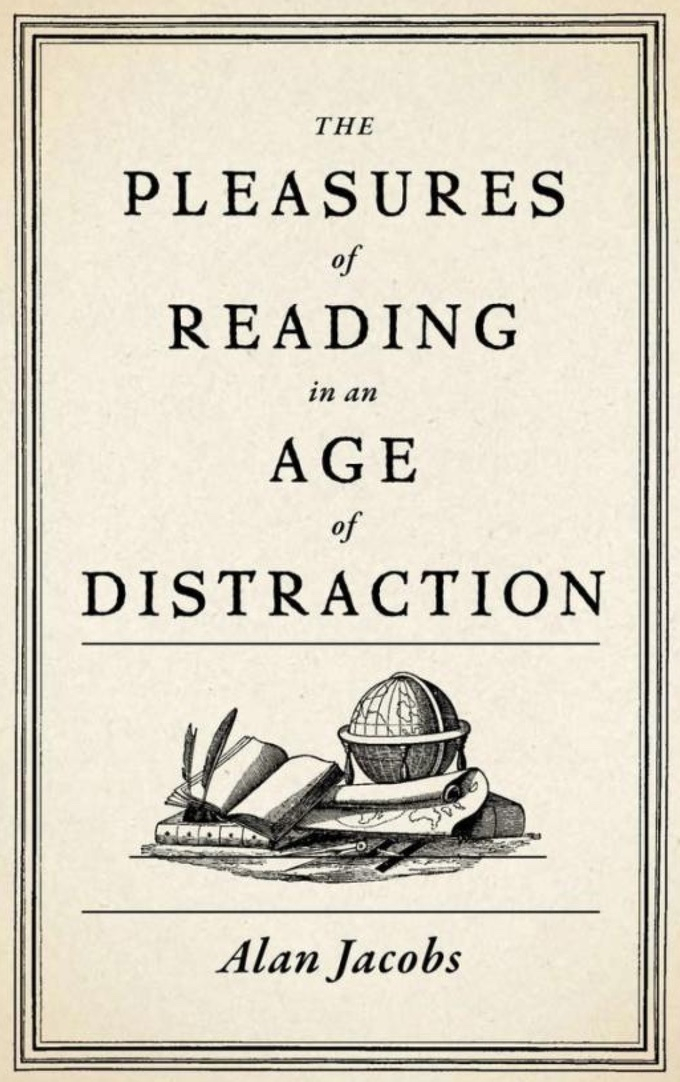
“The pursuit of knowing was freedom to me, the right to declare your own curiosities and follow them through all manner of books. I was made for the library, not the classroom. The classroom was a jail of other people’s interests. The library was open, unending, free” (p. 48). Reading these sentences was electrifying to me coming off of Alan Jacobs’ The Pleasure of Reading. It also captures some of why I don’t read the news: I don’t wish to be subject to what people I don’t know, who are paid to write, say is important.
A double standard:
“…they understate the task and allow the citizens of this country to pretend that there is real distance between their own attitudes and those of the ones appointed to protect them…” and so on through the paragraph (78–79). Earlier in the book, he calls Samori to respect the story of each individual, to not let the experience of single souls get wiped away by the necessarily generalizing statements of history. But here, he pins the blame for the “sprawling carceral state, the random detention of black people, the torture of suspects” on me. It’s wrong to conflate an individual’s helpless inaction with his will.
On the burden of “television”:
It occurred to me reading page 82 that we think that because we can see something, we can do something about it. But in these days of telegraph, tele-audio, and television, we still haven’t invented teleportation or omnipresence. We are closer to omniscience than ever before, with omnipresent eyes, and perhaps omnibenevolence, but we have neither true omnipresence nor omnipotence.
On godless holiness of the human body:
“And hell upon those who shatter the holy vessel” (87). What makes vessels holy if not the imago dei?
On personal moral fatalism:
“But you are human and you will make mistakes. You will misjudge. You will yell. You will drink too much. You will hang out with people you shouldn’t. Not all of us can be Jackie Robinson…” (95). I do not understand moral fatalism. I agree that sin is inevitable. But I disagree with anyone who says so. How anti-inspirational can you get?
On grand change:
“’It only takes one person to make a change,’ you are often told. This is also a myth. Perhaps one person can make change, but not the kind of change that would raise your body to equality with your countrymen” (96). RIGHT!
On the good old days and wicked men:
“…I raise it to show you that there was no golden era when evildoers did their business and loudly proclaimed it as such” (98).
On the myth of race:
“’Race’ itself is just a restatement and retrenchment of the problem” (115).
Finally, at the end of the book, Coates takes an unexpected environmentalist turn that inspires me.
I’d love to read during my half-hourly work breaks, but that defeats the purpose of the work breaks: To give my attentional resources time to recharge.
Reading The Pleasures of Reading will not only renew my love of books and inform how I choose what to read, but also inspire me to long-form attention again.
As I read again a few reviews and the publisher’s description of Alan Jacobs’ The Pleasures of Reading in an Age of Distraction, this time from the corridors surrounding the escalator well at the Washington State Convention Center, I teared up in gratitude as I concluded, tentatively as always, that You, God, had once again spoken directly to me for my good.
The message: You and those around you will be enriched if you heed Jacobs’ advice about reading, which Oxford University Press outlines as:
read at whim,
read what gives you delight,
and do so without shame.
I’d add to this, as I’m sure he will in the book: read deeply and at length.
Why so grateful to God? Well, first of all, because You continue to speak to me in these little words and names I remember upon waking from a night’s sleep. I think I can tell the difference between a random surfacing of my subconscious mind and when You are speaking. But also because this speaks directly to an inner predicament I have felt acutely since having children, namely, that I want to read, but find it such a chore.
Relatedly, I delight so much more in the children’s books I’ve read than in the “adult” books I’ve set before me to read. Books are not to be broccoli.
For movies, I have no illusions: It is for beauty and entertainment and admiration. Same for music. But for books, I absorbed the idea that you should read in a utilitarian fashion.
For my book reading, I’m going to alternate between enriching my understanding of the great literature of the world in chronological order and picking and choosing free reads completely whimsically.
If you asked me in my old age to tell you one thing about my life as it was today, I’d tell you three, which I’d be allowed to do because they’re all related and happened within the same twenty-minute period at bedtime:
I read several stories from Love Letters From God, a recent gift from my mother, to Sullivan and Éa freely by their request and without trepidation, demonstrating and substantiating that I was not as apprehensive about talking about God with them as I had been in the recent past because of my doubt,
I was unashamed to cast the Old-Testament stories from this book as possibly fiction, demonstrating that I’ve become unafraid of a non-literal interpretation of much of Scripture, and
I shared, upon request, some of the miracles I had heard about from friends in recent months (the story of Krista speaking Mandarin plus her brief account of seeing an eyeless man grow eyes) and one or two stories from Eric Metaxas’ Miracles, which I’d been reading after my mother gave the book to me back in October or November as a way of helping to combat my doubt. Éa gave me a smile as she lay down in bed while I told these stories that either meant she was finding the stories hard to believe or that she was very glad to hear God was still active in our days. She smiled widest at the story of the woman healed of severe peanut allergy.
Rob Bell just officially loosened up my interpretation of Matthew 7:13-14. This passage isn’t discussing eternal life at all. It’s almost laughable that I used to think so!
Saw this testimony on Youtube. I thought it would be worth your time to watch it. You only need to watch the first 13 minutes of it.
me:
Thanks, Mom! I’ve queued it up for later watching.
I’m concluding, however, that being assiduous about answering my questions and shoring up my faith isn’t healthy. There appears to be a positive correlation between the sedulity with which I approach my questions and the likelihood that my reading and watching will deepen my doubts.
In other words, I’m finding it much healthier and more likely to lead to restored strength of belief to take this whole thing slowly.
But by all means, if you come across other resources you think would be helpful, I’m very good at queueing things up for reading or watching and then following through with reading or watching them later. I’ve just about finished Surprised by Joy, which you graciously sent me last month. Thanks again for that.
Mom:
Sedulity - I had to look that one up. Great word. I think I understand what you’re saying.
I would have sent you the video link regardless, as it’s such a great testimony! (as well as 2 others, but I didn’t want to send too much). Yet there’s something about a radically changed life that’s hard to argue with.
There will always be unanswered questions. For most, I think it gets down to ‘you see what you believe’ - you can choose to see God in everything and you will or you can choose not to see Him, and you won’t and you’ll find ‘proof’ that he doesn’t exist. I can see God in a snowflake or an orchid or a colorful sunset. I can hear Him in the ocean, the breeze, or the birds singing. I can sense His pleasure and joy when I do something nice for someone, or just hang out with Him. It’s fun; it’s wonderful; it’s full of hope and peace. I wouldn’t trade it for anything.
Now faith is the assurance of things hoped for, the conviction of things not seen.
My relationship with God is based on my love for Him and His awesome love for me in soooo many ways. I haven’t heard you mention anything about loving God? Just wondering where you’re at with that?
Was ‘Surprised by Joy’ a good book? I’m praying that He surprises you. :)
Much love and can’t wait to see you all soon!
“The heavens declare the glory of God; the skies proclaim the work of his hands. Day after day they pour forth speech; night after night they reveal knowledge. They have no speech, they use no words; no sound is heard from them. Yet their voice goes out into all the earth, their words to the ends of the world… " Psalm 19:1-4a
me:
I’m 3/4 of the way through Surprised by Joy and Lewis has yet take his turn toward theism. So the book has been occasionally interesting, but mostly a semi-dry memoir of his childhood and youth. Still, a worthwhile read that’s much less heady than some stuff he wrote.
I’m praying He surprise me, too.
Psalms are very helpful, although the psalm you quote has at times been a source of anxiety, as sometimes in the past several months when I look at the skies, I don’t hear them declaring His glory, and that has worried me.
I do love God. That’s why the prospect of losing Him to has been so anxiety-ridden.
But since part of loving Him is pleasing Him, and the writer of Hebrews says that it’s impossible to please Him without faith (v. 6), and that to come to Him I must believe that He is and that He is a rewarder of those who seek Him, I do feel like I’m making a turn toward a firm decision to believe and stay put, as in a marriage. Even if my seeking of Him isn’t leading to the promised reward in the timing or way I prefer, it is still leading there. If I’ll only hold on.
Like I said, keep sending me whatever you want to send me. (You’re right that it’s hard to argue about a radically changed life.) Just know that I won’t necessarily read, watch, or listen to it right away.
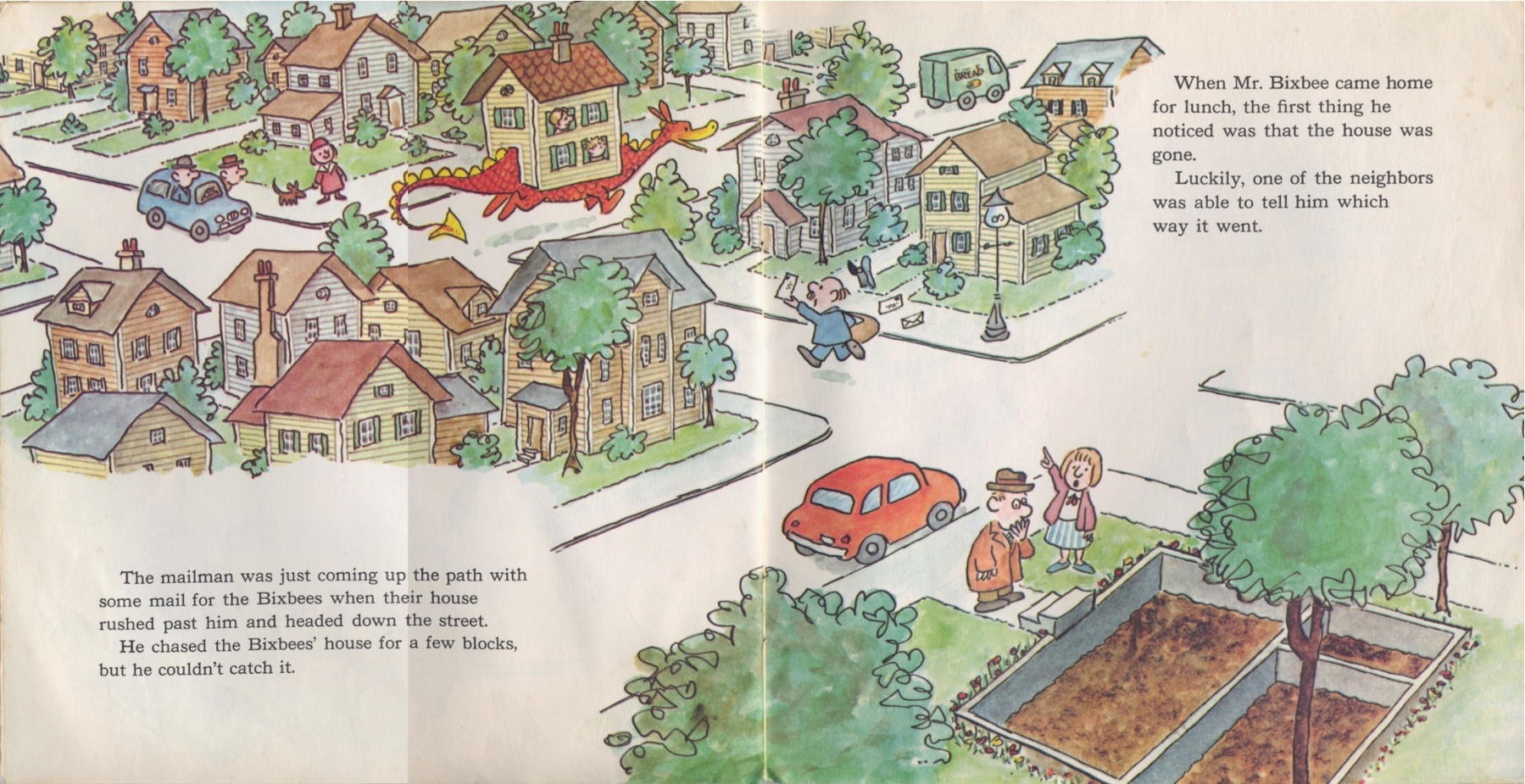
God, I want You to be like this dragon: Insistent on being seen and appreciated. (This particular leaf from the book I show only because I think it’s one of the funniest spreads I’ve ever read.)
In this painstaking work of historiography, Licona asserts that over five recent, competing, largely sociopsychological accounts, the Resurrection Hypothesis is the strongest explanation for the following three bits of historical data, which are near-unanimously admitted by historians:
that Jesus died by crucifixion,
that His disciples had experiences that led them to believe and proclaim that Jesus had been resurrected and had appeared to them, and
that within a few years of Jesus' death, Paul converted after experiencing what he interpreted as a post-resurrection appearance of Jesus to him.
I find Licona’s work here persuasive enough. To me, it would be only presuppositions against theism, perhaps reached via reflection on some of the philosophical problems posed by theism—some of which I admit I sometimes find tempting or threatening—that would lead someone to conclude differently.
Carla got a conclusive answer about her allergies today from the allergist: She is allergic to dust mites. Hearing this relieved and excited me, because we finally now have a definite problem with definite solutions. I am eager to help her feel better.
Carla reminded me this evening that I can set boundaries and say no to the kids. I was expressing consternation that it was so difficult to concentrate on something I wanted to accomplish, like (this evening) finding a way to sing those B♭s in “Valjean’s Soliloquy,” while in the presence of the kids because they—especially Sullivan—would interrupt with chatter or questions or requests. She made it very simple and was in fact surprised that I was not setting boundaries. Thanks, Carla.
Reading about Jairus’ daughter this evening in The Jesus Storybook Bible found me asking inwardly, “Is this stuff going to hold up for her against 21st-century naturalistic bias? It seems like it’s ripe for scoffing and skepticism. Actually, I almost feel silly believing that this stuff actually happened. Is Jesus necessary?” Father, may it hold.